
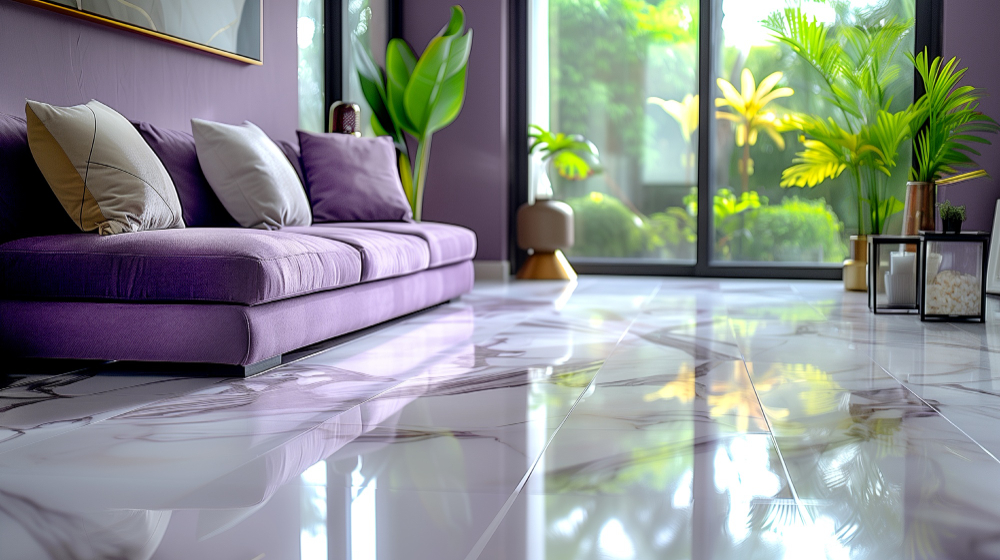
Natural stone flooring—whether it is the timeless elegance of Carrara marble, the organic warmth of travertine, or the resilience of granite—is a significant investment in a property’s aesthetic and financial value. Unlike synthetic alternatives, natural stone is a porous, reactive material that interacts with its environment. This means that maintaining its brilliance is not a matter of luck, but rather a result of deliberate, professional-grade care.
In luxury property maintenance, many beautiful stone floors lose their luster prematurely due to incorrect cleaning habits or simple neglect. To preserve that factory-fresh clarity, a homeowner must balance daily preventative habits with periodic professional intervention.
Understanding the Source of the Shine
To maintain stone effectively, it is essential to understand that a high-gloss finish is not a topical coating or a wax. Instead, the glow is a result of the stone itself being polished to a microscopic smoothness that reflects light uniformly.
When a stone floor becomes dull, it is typically the result of two factors: abrasion and chemical etching. Abrasion occurs when fine grit is ground into the surface by foot traffic, acting like sandpaper to create thousands of tiny scratches. Etching, conversely, is a chemical reaction. When acidic substances come into contact with calcium-based stones like marble or limestone, they physically dissolve a thin layer of the surface, leaving behind a cloudy, matte spot. Proper maintenance is designed to mitigate these two specific threats.
The Necessity of pH-Neutral Cleaning
The most frequent error in stone maintenance is the use of standard household cleaners. Many multi-purpose sprays, as well as “natural” remedies like vinegar or lemon juice, are highly acidic. For stones such as marble and travertine, acid is fundamentally destructive.
A professional maintenance routine requires a pH-neutral stone soap. These specialized formulas are designed to emulsify surface oils and lift dirt without reacting to the minerals within the stone. Ideally, one should use a no-rinse formula to prevent the accumulation of streaks or a dulling film that can occur when soapy water evaporates on a polished surface.
Preventative Measures and Entry Management
The most effective way to reduce the need for aggressive restoration is to stop contaminants at the door. Most of the grit that destroys a stone’s shine is tracked in from the outside. By implementing a strategic matting system, a homeowner can capture the majority of abrasive particles before they ever reach the polished floor.
High-quality walk-off mats should be placed at every entrance. It generally takes several steps for a shoe to shed its burden of sand and moisture, so the larger the mat, the better the protection. It is also vital to ensure that these mats have a non-slip, non-staining backing that will not bleed dyes into the porous stone.
Internal Dust Management
Daily dust mopping is the foundation of stone care. Even a small amount of household dust can contain silica and other hard minerals that cause micro-scratching over time. Using a clean, dry microfiber mop is the safest method for daily debris removal.
One should generally avoid using vacuum cleaners on polished stone. The wheels of a vacuum can trap grit and drag it across the floor, while the hard plastic bristles of a beater bar can create fine scratches that gradually diminish the floor’s reflectivity. If a vacuum must be used, it should be set to a hard-floor mode where the brush roll is completely deactivated.
The Role of Impregnating Sealers
There is a common misconception that a sealed stone is impervious to damage. In reality, a sealer acts as a defensive barrier that buys the homeowner time. Because stone is porous, liquids can seep into the material and cause deep-tissue staining. A high-quality sealer fills these pores, slowing the absorption of spills.
In modern stone care, we utilize penetrating or “impregnating” sealers. Unlike topical waxes that sit on the surface and eventually peel or yellow, these sealers work beneath the surface. They allow the stone to breathe—releasing internal moisture vapors—while repelling external oils and water. Depending on the volume of traffic, a professional re-sealing every twelve to eighteen months is recommended to maintain this protective shield.
Managing Etch Marks and Surface Scratches
If a floor develops a dull ring from a glass or a cloudy patch from a spill, it is likely an etch mark rather than a stain. Because an etch is physical damage to the stone’s surface, it cannot be washed away with conventional cleaning.
Small, isolated etches can sometimes be remedied with a specialized stone polishing compound and a soft cloth. However, if the scratching is deep enough to be felt with a fingernail, or if the etching covers a wide area, professional honing is required. This process involves using diamond-impregnated pads to mechanically resurface the stone, erasing the damage and restoring the original clarity.
Long-Term Professional Restoration
Even with meticulous daily care, every natural stone floor will eventually experience some degree of traffic wear. This is a natural part of the material’s life cycle. In a typical high-end residence, a professional refresh is usually beneficial every three to five years.
This service is less intensive than a full restoration. It involves a light diamond-polishing pass and a fresh application of sealer. By scheduling this periodic maintenance, homeowners can avoid the more significant expense of a total regrinding project, ensuring the floors remain a highlight of the home’s interior design indefinitely.
Conclusion
Maintaining the shine of natural stone is an exercise in consistency and respect for the material. When the correct pH-neutral chemistry is paired with diligent dust management and professional sealing, the stone rewards the owner with a depth and luster that synthetic materials cannot match.
A well-maintained stone floor serves as a hallmark of a meticulously cared-for property. By following a structured maintenance plan, you ensure that your investment continues to provide a sophisticated, luxurious foundation for your home for decades to come.